Thirty Seconds of Coin, Sixty Million Dollars of Movement: Inside Cricket's Toss Window

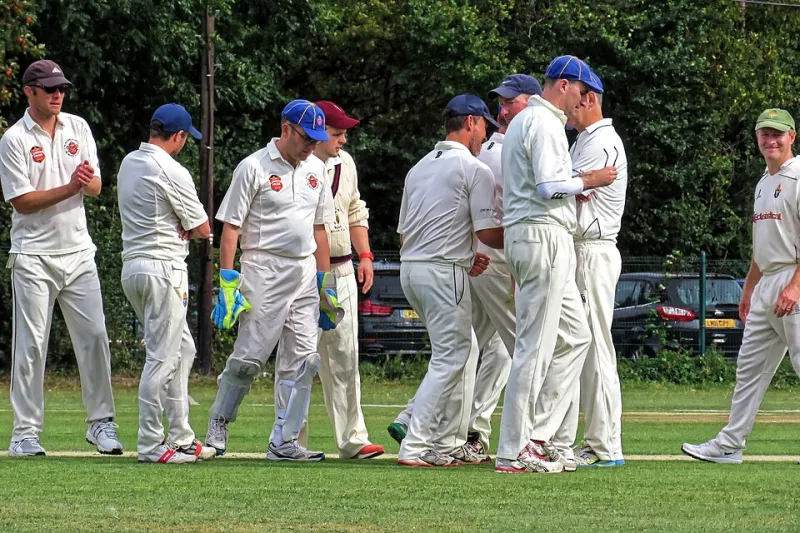
Photo: Department of Foreign Affairs and Trade, CC BY 4.0, via Wikimedia Commons
Picture this: it's 2:14 a.m. Eastern, you're half-awake on your couch somewhere in Ohio, and on the other side of the planet, two captains in matching blazers are walking to the middle of a stadium in Colombo while a commentator holds a coin. Thirty seconds later, a chunk of metal decides whether the same team that opened at +140 is suddenly sitting at -105.
If you're used to NFL Sundays, that sounds absurd. The opening coin toss in football is a formality — a camera moment, a trivia answer. Nobody re-prices a Super Bowl line over it. In cricket, the toss is arguably the single most consequential 30 seconds of the entire match, and if you're betting these games from the U.S., it's the moment you absolutely cannot sleep through.
Why a Coin Flip Actually Matters Here
Cricket is one of the few sports where the playing conditions themselves change based on the toss result. The pitch — a 22-yard strip of clay and rolled grass — behaves differently depending on weather, wear, and moisture. Batting first on a fresh, dry pitch might mean piling up runs. Batting last, on the same surface two days later, might mean surviving deliveries that crack, spit, and spin sideways.
So when a captain wins the toss, his decision to bat or bowl first isn't a tactical garnish. It's often the whole strategic meal. Weather forecast says overcast? Bowling first becomes a weapon, because the ball moves more through humid air. Pitch looks like a baked highway? Bat first, rack up a mountain, and let the surface crumble behind you.
Bookmakers know all of this. Which is why the market doesn't really 'open' at the toss — it gets rewritten by it.
Following One Match Through the Toss Window
Let's trace a hypothetical but very typical scenario: an ODI between India and Australia, starting at 2:30 p.m. local time in a stadium in India. That's roughly 4 a.m. Eastern — squarely inside your REM cycle if you live anywhere west of the Atlantic.
T-minus 60 minutes: The pre-toss line has India as modest favorites, say -120, built on form and home conditions. Sharp bettors — the ones who study pitch reports and 10-day weather forecasts — have already positioned themselves.
T-minus 10 minutes: The captains meet at the pitch. The broadcast shows a close-up of the surface: dry, cracked at one end, clearly going to deteriorate. Pundits start saying the magic words — 'spin will play a big role later in the game.'
The toss: Home captain calls correctly and, without hesitation, elects to bat. Now everything accelerates.
T-plus 5 minutes: The line that read India -120 snaps to India -160 within minutes. Why? Because batting first on a deteriorating pitch is a structural advantage, and the market prices structural advantages fast. Anyone who liked India and waited for a 'better number' just watched the door close.
T-plus 30 minutes: Second-tier markets recalibrate too — top run-scorer props, first-innings totals, even the 'method of next dismissal' style niche bets. Everything downstream of the toss shifts.
By the time the first ball is bowled, the 'real' market has been open for half an hour. The toss wasn't a pregame note. It was the game opener.
The U.S. Problem: Your Best Information Arrives at 2 A.M.
Here's the practical headache for American bettors. Major international cricket is scheduled for local prime time in Asia, Australia, and the Caribbean — which translates to overnight and early-morning slots in the U.S. The toss window, the half hour where the most informed line movement happens, routinely lands between midnight and 6 a.m. Eastern.
Compare that to American sports. An NBA tip-off at 8 p.m. means the closing line develops while you're awake and watching. Cricket asks you to either set an alarm or accept that you're entering the market late, at worse numbers, with less information than the people already in it.
This is exactly why a growing group of U.S.-based cricket bettors treat the toss like a scheduled event in its own right — checking pitch reports, following toss coverage, and getting positions down before the market fully digests the captain's call. It's the cricket equivalent of beating the closing line on an NFL injury report, except the 'injury report' is a guy running his hand over a strip of dirt at 2 a.m.
What Actually Moves the Line After the Toss
A few variables consistently drive the sharpest post-toss adjustments:
- The decision itself. Bat vs. bowl first on a questionable surface is the biggest single lever. A 'surprise' decision — one that contradicts the pitch report — creates the wildest swings.
- Weather stacking. A toss win plus a rain-reduced forecast can compress the match format in bettors' minds, shrinking totals and tightening underdog paths.
- Squad confirmation. Toss time is also when final XIs are announced. A star spinner left out on a spinning pitch? That's a line mover hiding inside a routine announcement.
- Crowd and venue history. Some grounds have documented toss biases — teams batting first there win at a lopsided rate. The market knows, and it adjusts the moment the coin lands.
Bottom Line for the New Fan
If you're coming from baseball or football, retrain your instincts: in cricket, the pregame coin flip isn't trivia, it's the opening bell for the real market. The money that moves in the 30 minutes after the toss is often the sharpest money of the entire match — and it happens while most of America is asleep.
You don't have to become a 2 a.m. creature. But if you're serious about betting cricket from the U.S., at minimum, know when the toss is scheduled, check the pitch report before bed, and understand that the number you see at breakfast is a number that's already lived through the most important 30 seconds of the game.