Six Balls, Six Chances to Sweat: How Cricket's In-Play Betting Outpaces Anything You've Seen in American Sports
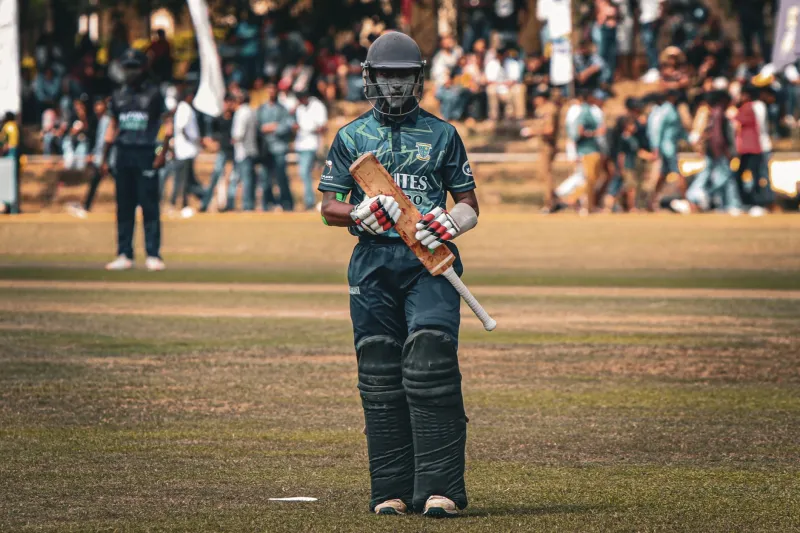
Picture this: you've got money riding on a basketball game, and the odds haven't moved since halftime. Now imagine a sport where the betting line can swing twice in fifteen seconds, dozens of times per hour, all night long. Welcome to cricket's in-play market — the fastest betting rhythm most Americans have never encountered.
The Rhythm Problem With American Sports
American bettors are conditioned to slow cycles. An NFL game offers maybe a handful of meaningful odds shifts: after touchdowns, after turnovers, after injuries. An NBA game ticks along with quarter-by-quarter adjustments, and baseball — cricket's closest cousin — only really moves when runs actually cross the plate.
Cricket operates on a different clock entirely. Each "over" consists of six deliveries, and every one of those six balls is a discrete event that can move a line. A batter smashes a six? Odds shift. He swings and misses? Shift again. A bowler wheels out a slower ball that fools everyone? You guessed it.
That means a single over can generate six micro-betting windows, and a Twenty20 match — the sprint version of the sport, roughly three hours long — packs in 120 deliveries per side. Do the math and you're looking at hundreds of distinct moments where the market re-prices itself. No American sport comes close.
What Exactly Is a Cash-Out, and Why Does Cricket Do It So Fast?
If you've bet on U.S. sports apps, you've probably seen the cash-out button: the option to settle your bet early, before the game ends, locking in whatever profit or loss the current odds dictate.
In cricket, cash-outs happen at a blistering pace because the underlying state of the game changes so frequently. A team chasing 180 runs in 20 overs might be a live underdog after two quick wickets, then a heavy favorite two overs later after a big hitting burst. The cash-out value on your original bet bounces around accordingly, sometimes dramatically, in the span of a single over.
Compare that to football, where a cash-out figure might barely budge for 20 minutes of game clock. Cricket bettors describe it as trading more than betting — the position is never static for long.
'Fancy' Bets and Session Runs: A Quick Glossary
Cricket's in-play markets have their own vocabulary, and some of it will sound foreign even to seasoned American bettors.
Session runs refer to wagering on how many runs will be scored in a specific stretch of the match — say, the first six overs of an innings. It's like betting on the over/under for a single quarter, except the result resolves in minutes.
Fancy bets (a term borrowed from Indian betting markets) are exotic proposition wagers on granular outcomes: whether a particular batter reaches a milestone, how many runs come off a given over, whether the next ball is a wicket. These are the micro-bets that make cricket's in-play scene so frenetic — and so dangerous to a bankroll.
On betting exchanges, where players bet against each other rather than a bookmaker, these markets update ball by ball, with liquidity shifting in real time. It's closer to day trading than to filling out a parlay.
The Speed Trap: Why Fast Betting Drains Bankrolls Fast
Here's the cautionary part, and it's not a throwaway warning. The same ball-by-ball cadence that makes cricket betting exhilarating also makes it uniquely expensive.
Think about it this way: every bet you place carries a house edge or an exchange commission. If you place one bet per NFL game, you pay that cost once. If you're wagering on session runs, over totals, and fancy bets across every over of a T20 match, you're paying that cost dozens of times in a single evening. The math compounds against you at a rate American sports never demand.
There's also the psychological factor. Fast markets invite impulsive reactions. A batter gets out, you feel the odds turn against you, and the temptation to chase — to immediately re-bet and recover — is enormous. Chasing losses in a market that re-prices every ten seconds is a recipe for a rough night.
A few practical guardrails worth adopting:
- Set a fixed session budget before the match starts and treat it as spent the moment the first ball is bowled.
- Limit yourself to a set number of bets per match, not per over.
- Avoid live betting during emotional swings — right after a wicket or a dropped catch is exactly when the market (and your judgment) is most erratic.
A Note for U.S. Bettors on Where This Happens
One more thing worth flagging: most of the hyper-fast cricket exchange action lives on offshore platforms, many of which operate outside U.S. regulation and outside the protections that come with state-licensed sportsbooks. Legal, regulated American apps have expanded their cricket offerings considerably as the sport grows stateside, but the exotic in-play markets described above are often thinner or absent there — and for good reason. Regulators know that high-frequency micro-betting markets carry elevated risk.
If you're a new cricket fan drawn in by the speed, stick to licensed operators, understand that the fastest markets are often the least protected ones, and remember that in cricket, unlike football, the game never really stops long enough for you to catch your breath.
The ball-by-ball betting rhythm is genuinely unlike anything in American sports — and that's exactly why it deserves both your curiosity and your caution.